Key takeaways
- Marble offers unmatched natural beauty but etches and stains; it suits owners who appreciate patina.
- Quartz is the most forgiving worktop for busy kitchens.
- Large-format porcelain is the most practical choice for floors and walls with a stone look.
- Combining materials — marble for hero pieces, quartz or porcelain elsewhere — gives the best balance.
Surfaces define the character of a luxury interior. They're also among the most expensive choices you'll make — and the hardest to change later. Here's how marble, quartz and porcelain compare in real homes.
Natural marble
The look: unique, deep veining, translucency and a cool, luxurious touch. No two slabs are the same.
The reality: marble is calcium-based, so acids such as lemon, vinegar and some cleaners etch the surface. It is porous and needs periodic sealing. Over time it develops a patina that many people love — and some don't.
Best for: kitchen islands, feature walls, bathroom vanities, shower walls and backlit staircases — places where its beauty is the point.
Engineered quartz
The look: consistent colour and pattern, from solid tones to marble-inspired veining.
The reality: quartz is non-porous, highly stain-resistant and low-maintenance. It doesn't need sealing. It should be protected from very high direct heat, and outdoor use isn't recommended as UV can discolour some products.
Best for: busy kitchen worktops, family bathrooms and rental properties.
Porcelain and sintered stone
The look: large-format slabs reproduce marble, concrete, stone and wood with impressive realism, including book-matched designs.
The reality: extremely hard, heat-, stain- and UV-resistant, and suitable indoors and outdoors. Thin slabs allow seamless walls and furniture cladding. Edges and cut-outs need skilled fabrication.
Best for: floors throughout, bathroom walls, outdoor terraces, kitchen worktops and cladding.
Side-by-side comparison
| Marble | Quartz | Porcelain / sintered stone | |
|---|---|---|---|
| Natural uniqueness | Highest | Low | Medium (printed) |
| Stain resistance | Low – needs sealing | High | Very high |
| Etching from acids | Yes | No | No |
| Heat resistance | Good | Moderate | Very high |
| Outdoor use | Limited | Not recommended | Yes |
| Maintenance | Higher | Low | Very low |
The designer's approach: combine, don't compromise
In many of our projects we use each material where it performs best:
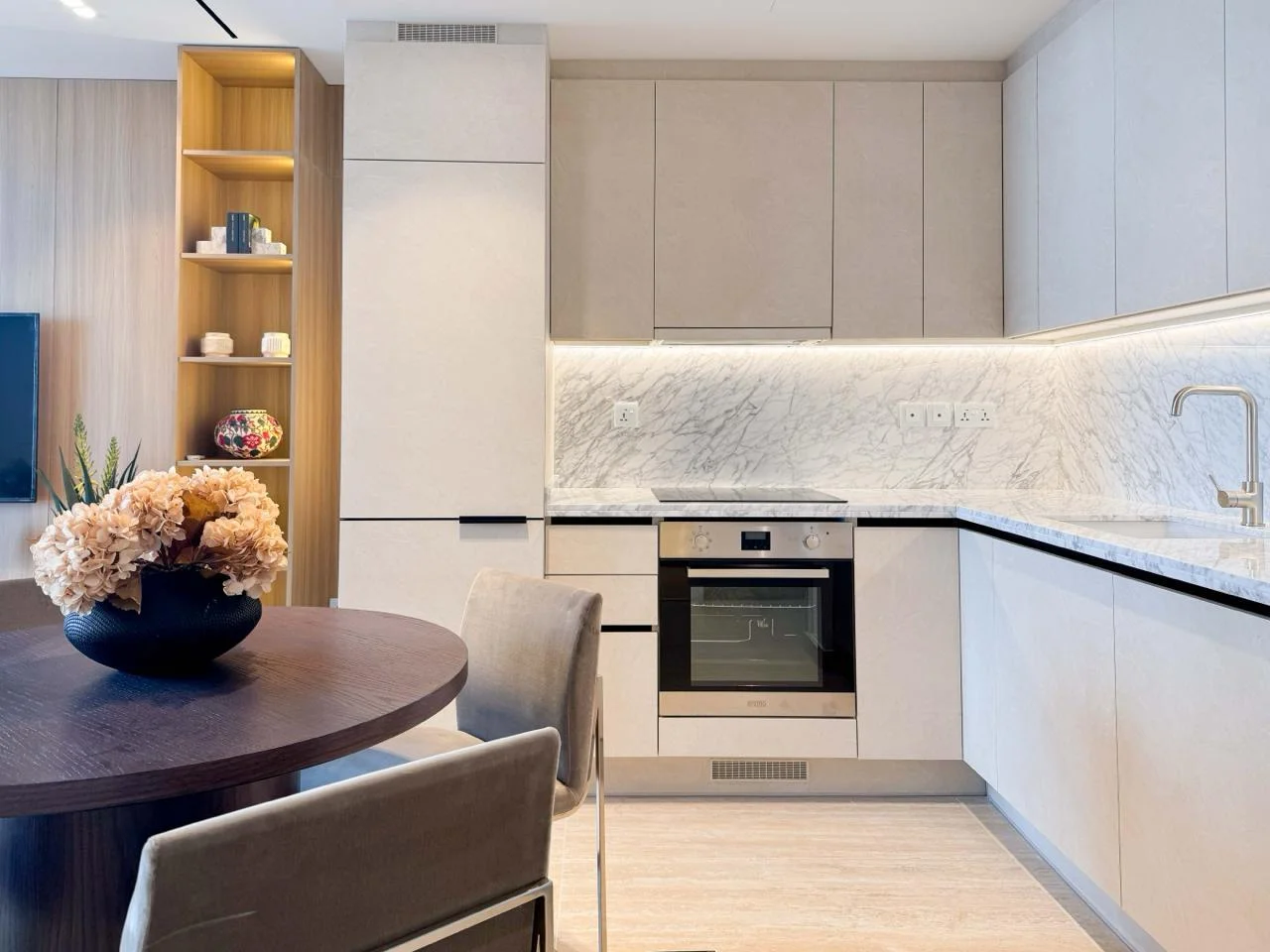
- A marble island as the kitchen's centrepiece, with quartz on the cooking run
- Marble vanities and feature walls in the primary bathroom, with porcelain floors for slip resistance and easy cleaning
- Large-format porcelain flooring throughout the home for continuity
This gives the emotion of natural stone where it's seen and touched, and practicality where it matters.
Before you choose
- View full slabs, not small samples — veining changes across a slab.
- Ask how edges, joints and cut-outs will be detailed.
- Agree slab layout (where veins fall) before cutting.
- Understand the care routine and accept it before you buy.
Our designers and stone fabricators select and lay out slabs with you — because the difference between a good stone installation and a breathtaking one is decided before the first cut.
FAQ
Is marble a good choice for a kitchen?
Yes, if you accept that it will etch and develop a patina. Many clients use marble for the island and a more forgiving surface for the main cooking area.
Is quartz better than marble?
Quartz is more practical — non-porous and stain-resistant — while marble is more unique and natural. Neither is 'better'; the right choice depends on use and expectations.
Can porcelain look like real marble?
High-quality large-format porcelain can replicate marble veining convincingly, especially with book-matched slabs, and it is far easier to maintain on floors and walls.