Key takeaways
- Great joinery is planned alongside MEP and lighting, not added at the end.
- Material and hardware quality decide how it looks in five years, not just on handover day.
- Dubai's heat and humidity affect board choice, edges and finishes.
- Allow realistic lead times — good joinery is measured, manufactured and installed in stages.
Joinery is where an interior becomes personal. Wardrobes that reach the ceiling, a kitchen that uses every centimetre, a TV wall that hides cables and a study that feels as if it belonged to the room all along — these are the details that distinguish a designed home from a furnished one.
Start with how you live
The best joinery begins with questions rather than drawings:
- What do you store, and how much of it?
- Who uses the space, and at what height?
- What must be visible, and what should disappear?
- Which items need ventilation, lighting or power?
A walk-in wardrobe for two people with different routines is a different design to a guest-room closet.
Choose materials for the climate
Dubai's heat and indoor humidity swings affect timber-based products. When choosing materials, consider:
- Boards: moisture-resistant or marine-grade boards for kitchens, bathrooms and laundry areas.
- Veneers and laminates: good-quality surfaces resist wear and fading; cheap ones peel at the edges.
- Lacquer and paint: excellent for a refined look, but need proper preparation and a clean spraying environment.
- Edges and sealing: well-sealed edges are the first line of defence against swelling.
- Stone and metal accents: can add contrast, and protect areas most exposed to water or heat.
Hardware is not a detail
Hinges, runners and handles are used every day, and they are what you feel. Quality soft-close hinges, full-extension drawers and well-engineered lift systems make joinery feel expensive for years. Ask what brand and load rating are specified, and what warranty applies.
Integrate lighting and power
Joinery should work with the electrical plan. Typical integrations include:
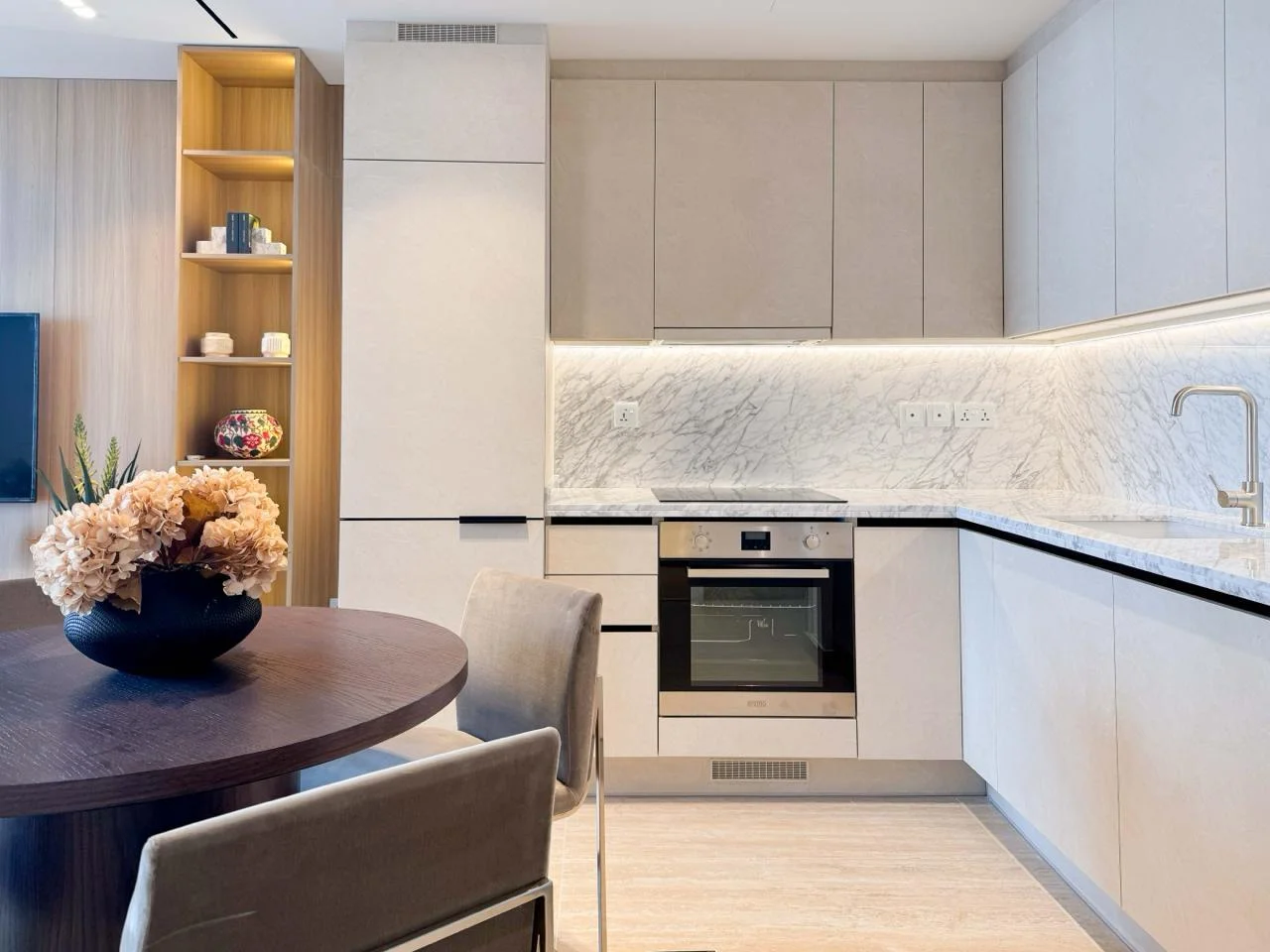
- LED strips inside wardrobes, niches and under kitchen cabinets.
- Sockets inside drawers, appliance garages and desks.
- Hidden cable routes for TVs and audio.
- Sensors that switch lights on when doors open.
Planning these before manufacturing avoids cut-outs on site and exposed cables.
Measure on site, not from drawings alone
Walls are rarely perfectly straight or square. Accurate site measurements after plastering and flooring are essential for good fit. Finishing tolerance and scribing details are part of what makes built-ins look like they were part of the building.
Understand the process and timeline
A typical joinery sequence is:
- Design and material selection.
- Shop drawings and client approval.
- Site measurement.
- Manufacturing and finishing.
- Installation, adjustment and snagging.
Approving drawings late or changing finishes after production starts is the most common source of delays.
Protect the investment
Good joinery needs very little maintenance: gentle cleaning, avoiding standing water and occasional hardware adjustment. A written care guide and a clear warranty should be part of handover.
If you are planning wardrobes, a kitchen or built-in storage as part of a renovation, our design and joinery team can develop drawings, material samples and a clear schedule — so the result looks as good in a decade as it does on day one.
FAQ
How long does custom joinery take in Dubai?
After final drawings and site measurements, manufacturing and installation commonly take several weeks, depending on scope and finishes. Early design decisions keep the project on schedule.
What material is best for wardrobes and kitchens?
It depends on use and budget. Moisture-resistant boards, quality veneers and durable laminates or lacquer are common. Wet areas need materials designed to resist humidity.
Is custom joinery better than ready-made furniture?
Custom pieces use space fully, hide services and match the interior exactly. Ready-made can suit tight budgets or flexible spaces, but rarely fits as precisely.