Key takeaways
- Moisture-resistant carcasses and edge-banding matter more than door finish.
- Quartz and sintered stone suit busy kitchens; marble rewards owners who accept patina.
- Ventilation and a properly sized extractor protect cabinetry and ceilings.
- Plan lighting, sockets and appliance positions before joinery is drawn.
The kitchen is the hardest-working room in any home and, in Dubai, it works in a demanding environment: high outdoor temperatures, humidity when AC is off, intensive cooking and long periods when owners may be travelling. Choosing the right materials is the difference between a kitchen that ages gracefully and one that swells, stains and fades.
Cabinetry: what's inside matters most
Most kitchen failures start inside the cabinet, not on the door.
- Carcasses: specify moisture-resistant board, especially for sink and dishwasher units. Standard chipboard swells permanently once water reaches an exposed edge.
- Edge-banding: thick, well-applied edging protects board edges from steam and spills.
- Doors: lacquer, quality laminate, and sealed timber veneer all perform well. Solid oak is stunning but must be properly sealed and acclimatised.
- Hardware: soft-close hinges and full-extension runners from reputable manufacturers are worth every dirham — they are used thousands of times a year.
Worktops: beauty versus forgiveness
| Material | Strengths | Consider |
|---|---|---|
| Quartz | Non-porous, consistent, low maintenance | Not ideal next to very high direct heat |
| Sintered stone / porcelain | Heat, stain and UV resistant, thin profiles | Edges need careful detailing |
| Natural marble | Unique veining, luxurious feel | Etches with acids, needs sealing, develops patina |
| Granite | Durable, heat resistant | Fewer contemporary patterns |
Our own projects often pair a marble island — the showpiece — with a more forgiving surface on the main cooking run. You get the look where it's seen, and practicality where it's needed.
Flooring and walls
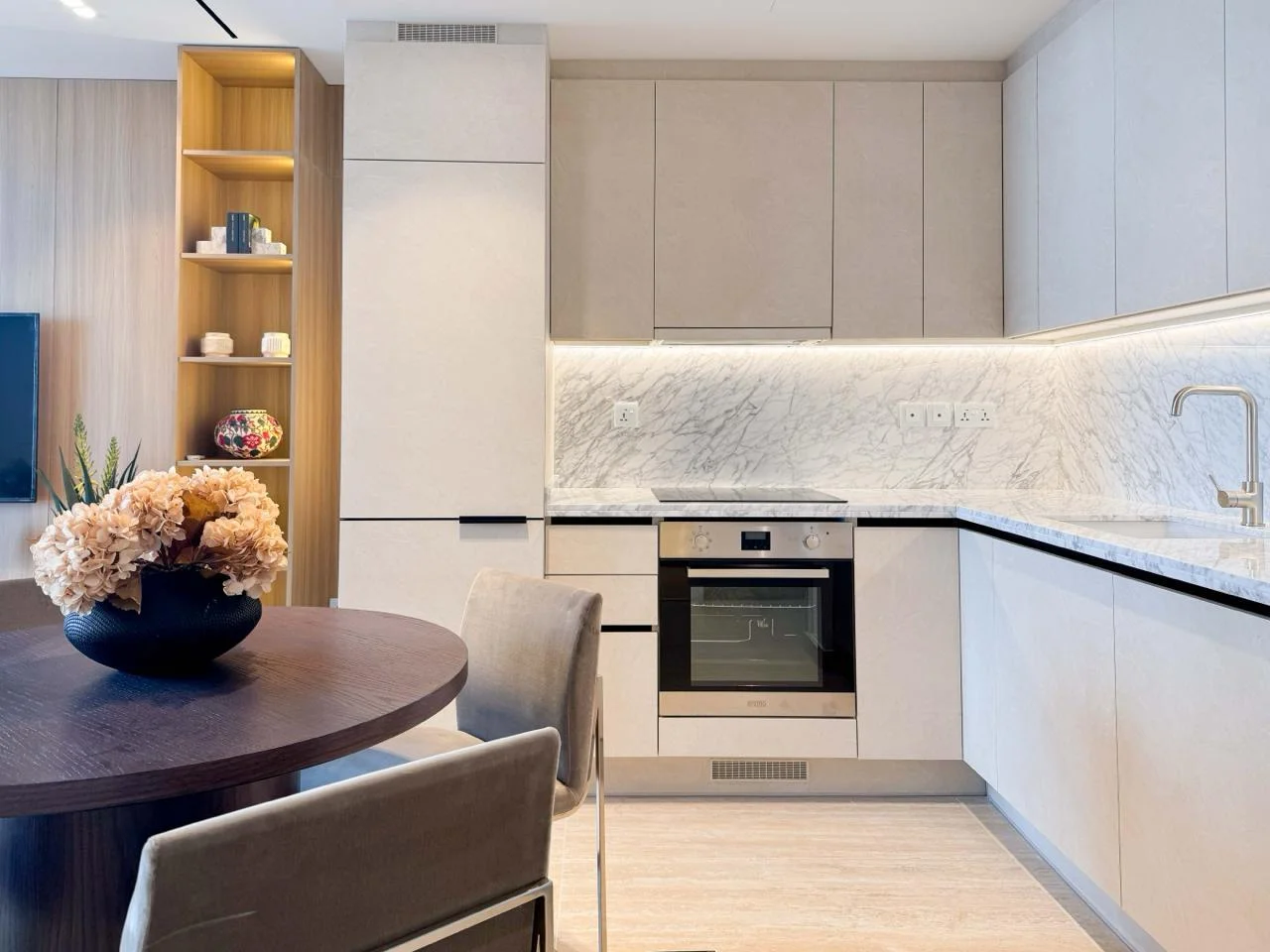
Large-format porcelain is the workhorse for kitchen floors: durable, easy to clean and available in convincing stone and wood looks. For backsplashes, a continuation of the worktop material creates a seamless, high-end effect and eliminates grout lines that collect grease.
Ventilation: the protective layer nobody sees
A correctly sized extractor, ducted outside where possible, protects ceilings, cabinetry and indoor air quality. In open-plan apartments, ventilation is also what stops cooking smells reaching the sofa. Plan the duct route early — it often decides where the hob can go.
Lighting and power
Layered lighting makes a kitchen both usable and beautiful:
- Task lighting under wall cabinets
- Pendant or linear lighting over the island
- Integrated lighting in shelving and glass cabinets
- Dimmable ambient lighting for evenings
Plan sockets for every appliance you own today and the ones you'll buy tomorrow. Moving a socket after the backsplash is installed is expensive.
Appliances: integrate early
Integrated appliances need exact dimensions before joinery is drawn. Choose models during design, not after — otherwise the fridge you love won't fit the opening you built.
Our approach
On every Heritage Turnkey kitchen, the designer, joinery workshop and MEP engineer sign off one coordinated drawing before production. That's how a curved marble island, integrated lighting and a perfectly flush appliance wall end up looking effortless — because the work happened on paper first.
FAQ
What is the best kitchen worktop for a busy household?
Quartz and sintered stone are the most forgiving: non-porous, stain-resistant and low-maintenance. Marble is beautiful but etches with acids and needs sealing.
Which cabinet material lasts best in Dubai?
Moisture-resistant board carcasses with quality edge-banding, combined with durable door finishes such as lacquer, high-quality laminate or sealed timber veneer. Avoid standard chipboard near sinks and dishwashers.
How long does a kitchen renovation take?
Typically 4–8 weeks including demolition, MEP adjustments, joinery installation and worktop templating. Custom joinery and imported stone are the main lead-time items.