Key takeaways
- Use three layers: ambient, task and accent, each on its own circuit.
- Warm white (about 2700–3000K) suits living areas; neutral white suits kitchens and workspaces.
- Dimmable, high-quality LEDs with good colour rendering make marble, timber and fabrics look right.
- Wiring, drivers and cut-outs must be set out before the ceiling closes.
Good lighting in a Dubai home uses three layers — ambient, task and accent — with warm, dimmable, high-quality LEDs, and it must be planned before walls and ceilings are closed. It is one of the cheapest ways to make finishes look more expensive.
The three layers
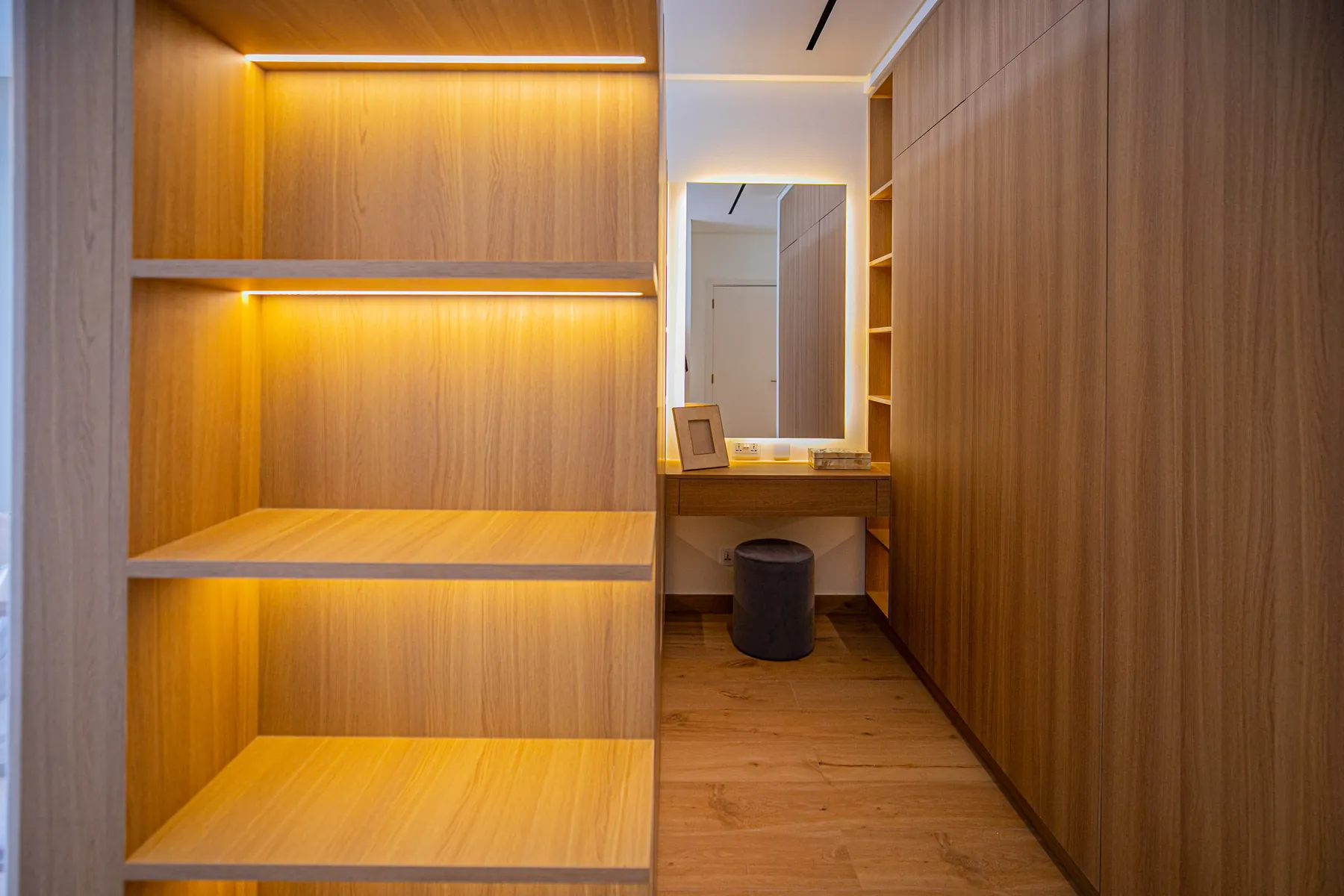
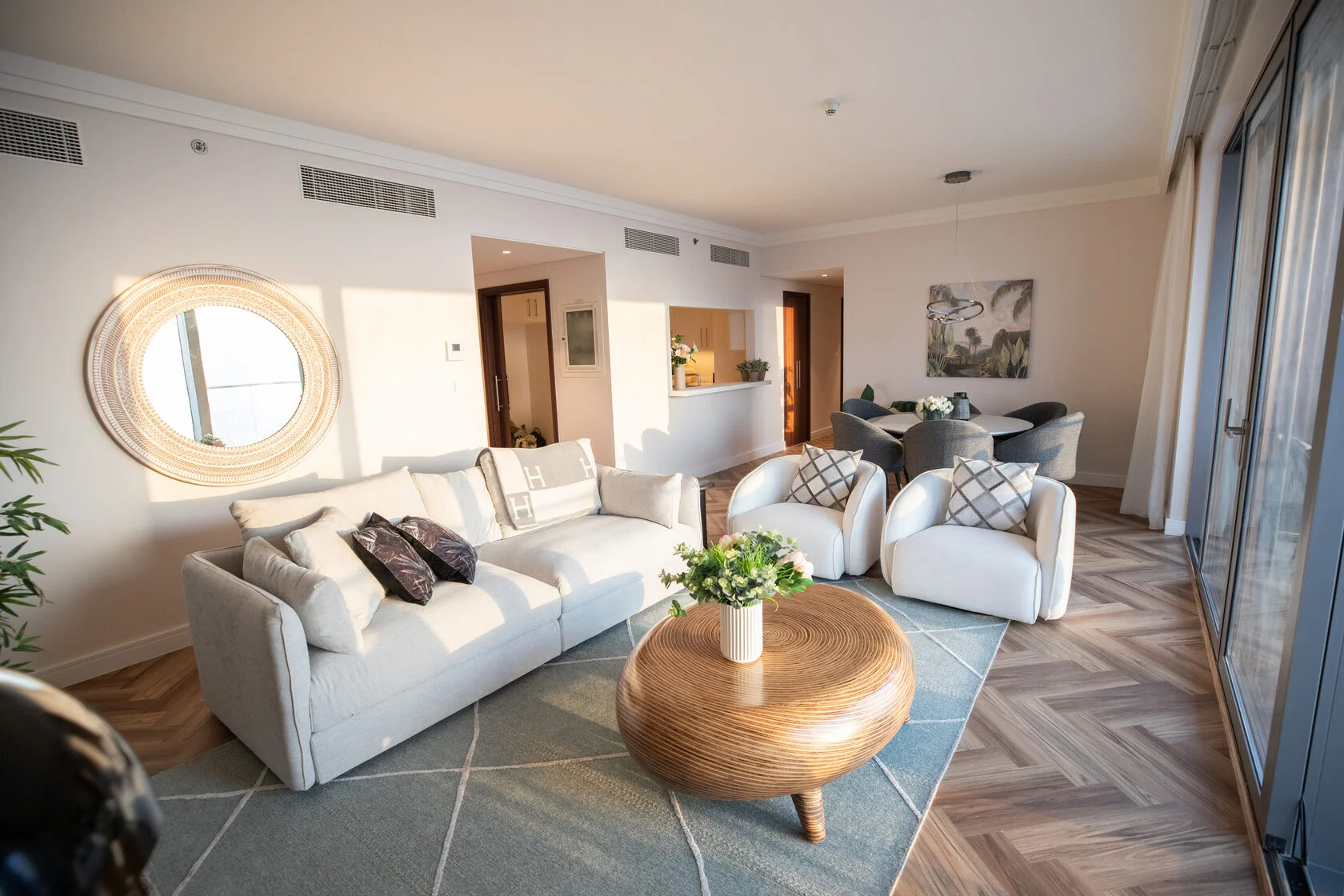
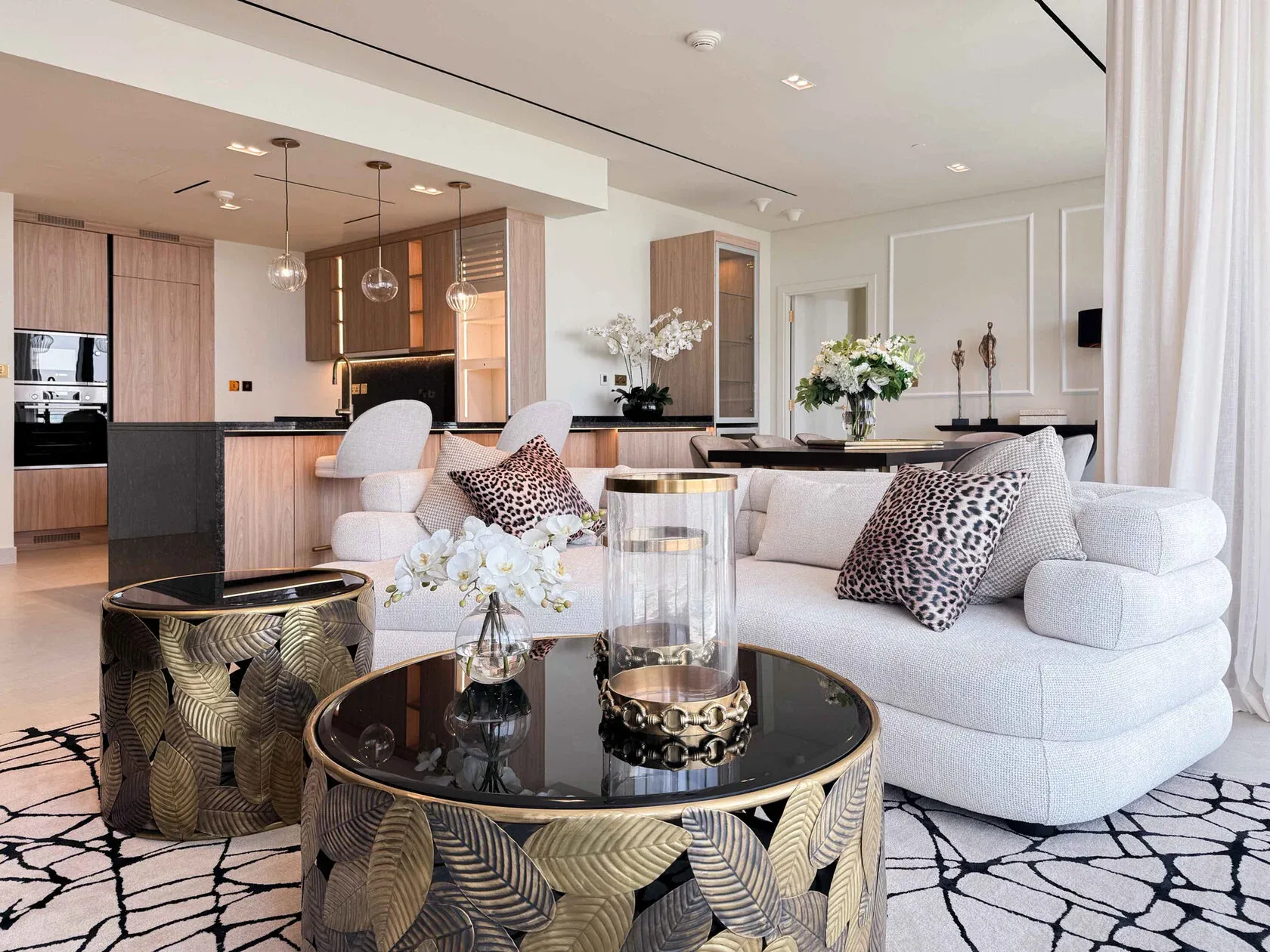
- Ambient: general glow from cove lighting, ceiling lights or wall washers
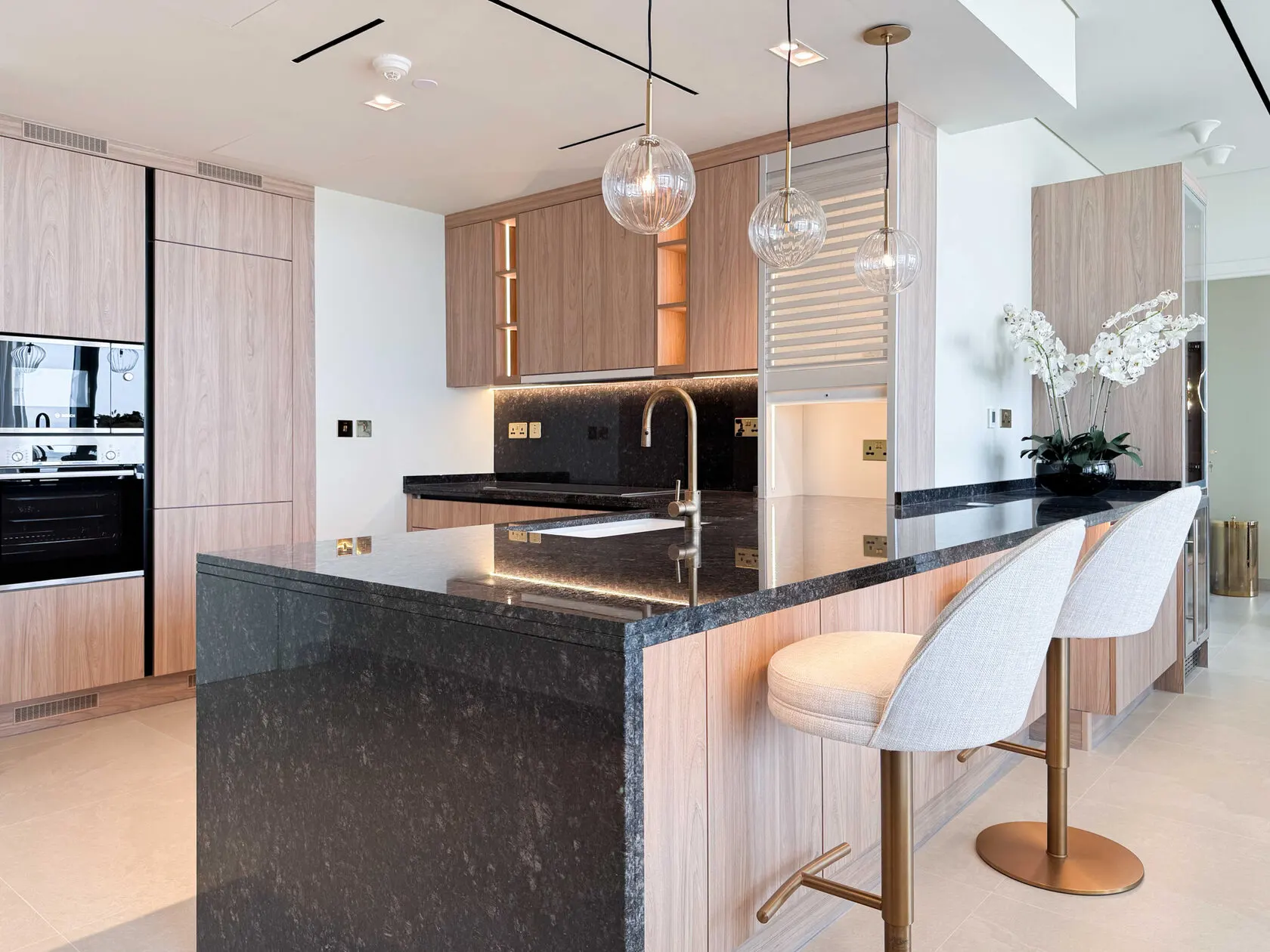
- Task: focused light for kitchen worktops, desks, mirrors and reading
- Accent: highlights for art, niches, joinery, stone walls and plants
Put each layer on its own circuit with dimmers or scenes, so one room can be bright for cleaning and soft for dinner.
Colour temperature and quality
| Space | Suggested colour temperature |
|---|---|
| Living, dining, bedrooms | 2700–3000K warm white |
| Kitchen, bathroom mirrors | 3000–4000K |
| Offices | 3500–4000K |
Choose fittings with a high colour rendering index so marble, timber and fabrics look natural. Cheap LEDs can make expensive finishes look flat.
Avoid glare and clutter
Use recessed or trimless fittings with deep reflectors, avoid pointing downlights at seating, and use linear or cove lighting to wash walls. Fewer, well-placed fixtures beat dozens of spots.
Room by room
- Living room: cove lighting, a few downlights, floor and table lamps, art lighting
- Kitchen: under-cabinet LEDs, pendants over the island, dimmable ceiling light
- Bathroom: backlit mirrors, soft ceiling light, moisture-rated fittings
- Bedroom: bedside controls, dimmable ambient light, no harsh downlights above the bed
- Outdoor: low-glare path, wall and pool lighting with correct IP ratings
Controls and smart lighting
Scene control, timers and app or voice control add comfort and can reduce energy. Integrate them with your smart home plan at wiring stage.
Planning timeline
- Concept and mood during design
- Fixture schedule and drivers before MEP first-fix
- Ceiling and joinery cut-outs coordinated on site
- Aiming and commissioning after painting
Lighting design is included in our interior design and joinery service, with electrical work by our in-house MEP team.
FAQ
What colour temperature is best for a living room?
Warm white, around 2700–3000K, creates a calm, welcoming atmosphere. Kitchens and offices often use neutral white, around 3500–4000K, for clarity.
How many downlights do I need?
There is no universal number. Spacing, beam angle and ceiling height matter more than count; too many downlights create glare and a 'Swiss cheese' ceiling. A layered scheme usually needs fewer, better placed fittings.
Can lighting be changed after renovation?
Surface-mounted and plug-in options can, but concealed cove and recessed lighting must be planned before closing ceilings and walls, so decide early.